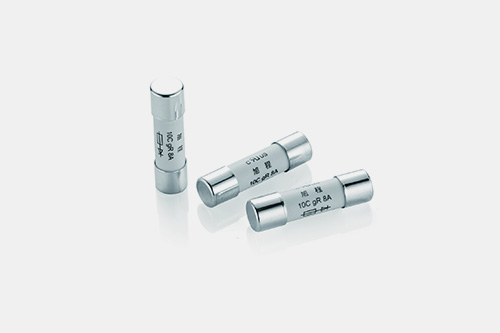



The material of a fuse has a decisive impact on its performance. Based on the search results, we can obtain the following information:
Fuses are generally made of silver copper alloy with high resistivity and low melting point. This alloy has good conductivity and melting characteristics, which can quickly melt when the current is too high, thus protecting the circuit. Early fuses were often made of lead antimony alloy, but due to safety reasons, this material has been phased out.
When choosing fuse materials, factors to consider include melting point, resistivity, conductivity, mechanical strength, and corrosion resistance. Different application scenarios may require different types of fuses, so the requirements for materials may also vary.
In summary, modern fuses are mainly made of silver copper alloy and no longer use lead antimony alloy. When selecting fuse materials, multiple factors should be considered comprehensively to ensure their reliability and safety in specific environments.
Read recommendations:
fast blow or slow blow fuse for microwave
bs 1362 fuse operation characteristics.The difference between self recovery fuse and blown fuse

MB:+86 13924633629 Ms.vicky
E-mail: [email protected]
Factory :
XC Electronics(Shenzhen)Corp.,LTD
Add: Xucheng Technology Park, Daling Street Industrial Park, Huidong County, Huizhou City, Guangdong Province
Shenzhen branch: Shenzhen Xucheng Electronic Commerce co.Ltd
Add: 17A,Bldg 1,Innovation Industrial Park, No. 1 Danqing RD, Jinsha, Kengzi, Pingshan DIST, Shenzhen,Guangdong 518122 China